Uncanny Cat Golf video 1
Gameplay footage showing cat shots, wall banks, hazards, and surreal course design.
Play Uncanny Cat Golf Online







Video
Gameplay footage showing cat shots, wall banks, hazards, and surreal course design.
Gameplay footage showing cat shots, wall banks, hazards, and surreal course design.
Home
Jump to the play area, read the introduction, and open the FAQ for this horror visual novel page.
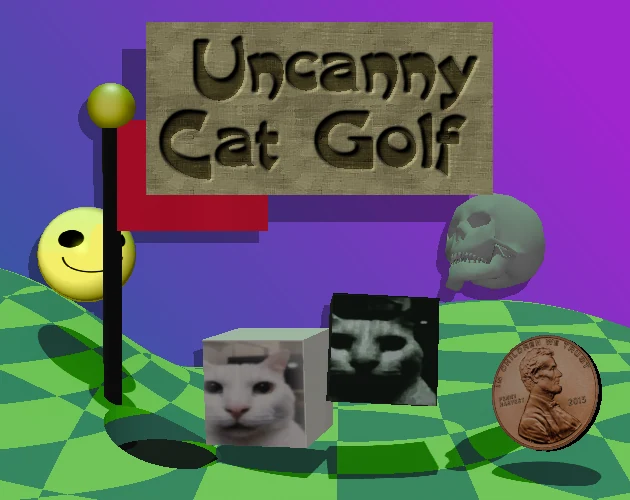
Uncanny Cat Golf asks the player to survive the tee, cup, walls, water, sand, moving clutter, and every safe place where the cat can stop without mistaking visual chaos for mechanical chaos. Colorful top-down courses place water, sand, walls, bumpers, moving clutter, smiling props, and old-web imagery around a clear flag-and-cup objective. Beneath the collage, movement still has causes: a chosen direction, a level of force, contact with a surface, lost momentum, and a final resting place. The safest way to learn is to separate hazards from decoration before shooting. Once that map is clear, the square cat becomes a readable moving object rather than a victim of random scenery.
A survival-minded plan is to identify the dangerous miss first and build a route that keeps the next stroke alive. The best first target is often not the cup but a broad area that cannot trap the next attempt. This reduces exposure to water and awkward corners while keeping the player in control of the route. When the cat stops somewhere bad, diagnose whether the danger came from angle, speed, collision, or a greedy target. Precise diagnosis prevents the next try from changing several things at once and creating a different failure.
Return to the hole that caused the most recovery strokes and replace one full-power attempt with a safe-zone plan. Treat each return as a small risk review rather than a demand for immediate perfection. Par is useful because it reveals accumulated recovery work, but a calm completed hole teaches more than repeated resets for an unlikely trick shot. visual noise encourages hurried reactions, while survival-minded restraint produces the most dependable route through each crowded hole. The visual pressure is part of the challenge; patience is the countermeasure. A route becomes dependable when every stroke protects the one that follows, even if the scenery keeps insisting that something stranger deserves attention.
The course asks the player to survive the way excess speed magnifies a small aiming error and carries the cat beyond useful cover without mistaking visual chaos for mechanical chaos. Colorful top-down courses place water, sand, walls, bumpers, moving clutter, smiling props, and old-web imagery around a clear flag-and-cup objective. Beneath the collage, movement still has causes: a chosen direction, a level of force, contact with a surface, lost momentum, and a final resting place. The safest way to learn is to separate hazards from decoration before shooting. Once that map is clear, the square cat becomes a readable moving object rather than a victim of random scenery.
A survival-minded plan is to use the least force that can reach a generous landing area. The best first target is often not the cup but a broad area that cannot trap the next attempt. This reduces exposure to water and awkward corners while keeping the player in control of the route. When the cat stops somewhere bad, diagnose whether the danger came from angle, speed, collision, or a greedy target. Precise diagnosis prevents the next try from changing several things at once and creating a different failure.
Return to the hole that caused the most recovery strokes and replace one full-power attempt with a safe-zone plan. Treat each return as a small risk review rather than a demand for immediate perfection. Par is useful because it reveals accumulated recovery work, but a calm completed hole teaches more than repeated resets for an unlikely trick shot. visual noise encourages hurried reactions, while survival-minded restraint produces the most dependable route through each crowded hole. The visual pressure is part of the challenge; patience is the countermeasure. A route becomes dependable when every stroke protects the one that follows, even if the scenery keeps insisting that something stranger deserves attention.
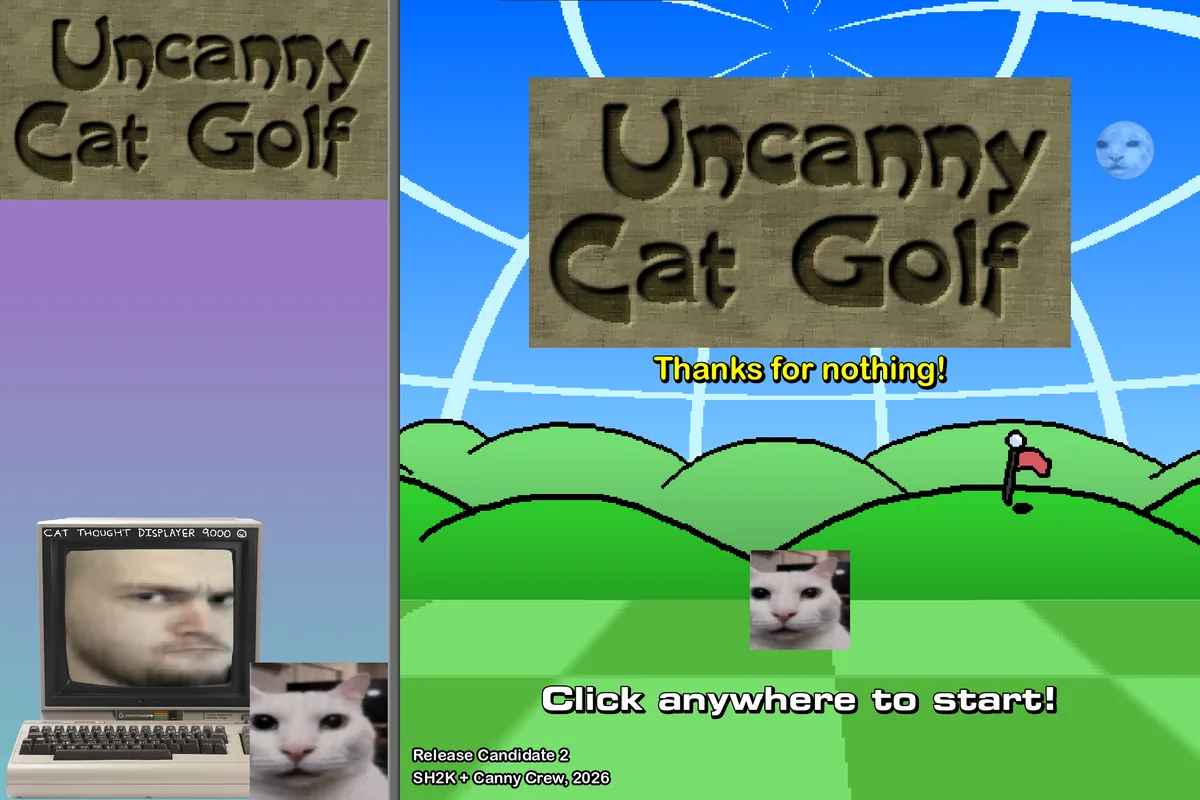
The course asks the player to survive large flat barriers that redirect movement without depending on a tiny lucky collision without mistaking visual chaos for mechanical chaos. Colorful top-down courses place water, sand, walls, bumpers, moving clutter, smiling props, and old-web imagery around a clear flag-and-cup objective. Beneath the collage, movement still has causes: a chosen direction, a level of force, contact with a surface, lost momentum, and a final resting place. The safest way to learn is to separate hazards from decoration before shooting. Once that map is clear, the square cat becomes a readable moving object rather than a victim of random scenery.
A survival-minded plan is to visualize the incoming and outgoing line before choosing a bank. The best first target is often not the cup but a broad area that cannot trap the next attempt. This reduces exposure to water and awkward corners while keeping the player in control of the route. When the cat stops somewhere bad, diagnose whether the danger came from angle, speed, collision, or a greedy target. Precise diagnosis prevents the next try from changing several things at once and creating a different failure.
Return to the hole that caused the most recovery strokes and replace one full-power attempt with a safe-zone plan. Treat each return as a small risk review rather than a demand for immediate perfection. Par is useful because it reveals accumulated recovery work, but a calm completed hole teaches more than repeated resets for an unlikely trick shot. visual noise encourages hurried reactions, while survival-minded restraint produces the most dependable route through each crowded hole. The visual pressure is part of the challenge; patience is the countermeasure. A route becomes dependable when every stroke protects the one that follows, even if the scenery keeps insisting that something stranger deserves attention.
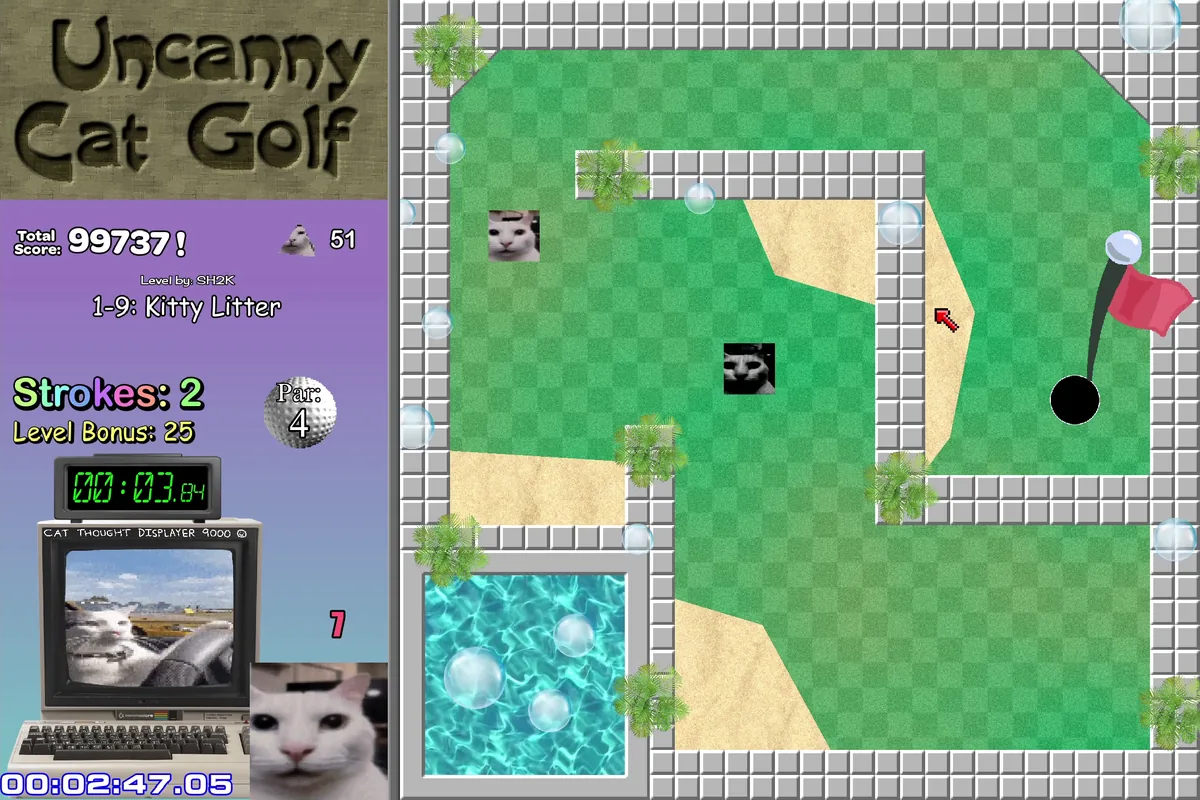
The course asks the player to survive water, sand, corners, narrow gates, and moving props that can turn one mistake into several strokes without mistaking visual chaos for mechanical chaos. Colorful top-down courses place water, sand, walls, bumpers, moving clutter, smiling props, and old-web imagery around a clear flag-and-cup objective. Beneath the collage, movement still has causes: a chosen direction, a level of force, contact with a surface, lost momentum, and a final resting place. The safest way to learn is to separate hazards from decoration before shooting. Once that map is clear, the square cat becomes a readable moving object rather than a victim of random scenery.
A survival-minded plan is to prefer a safe miss with an open follow-up over a shortcut beside a punishing obstacle. The best first target is often not the cup but a broad area that cannot trap the next attempt. This reduces exposure to water and awkward corners while keeping the player in control of the route. When the cat stops somewhere bad, diagnose whether the danger came from angle, speed, collision, or a greedy target. Precise diagnosis prevents the next try from changing several things at once and creating a different failure.
Return to the hole that caused the most recovery strokes and replace one full-power attempt with a safe-zone plan. Treat each return as a small risk review rather than a demand for immediate perfection. Par is useful because it reveals accumulated recovery work, but a calm completed hole teaches more than repeated resets for an unlikely trick shot. visual noise encourages hurried reactions, while survival-minded restraint produces the most dependable route through each crowded hole. The visual pressure is part of the challenge; patience is the countermeasure. A route becomes dependable when every stroke protects the one that follows, even if the scenery keeps insisting that something stranger deserves attention.
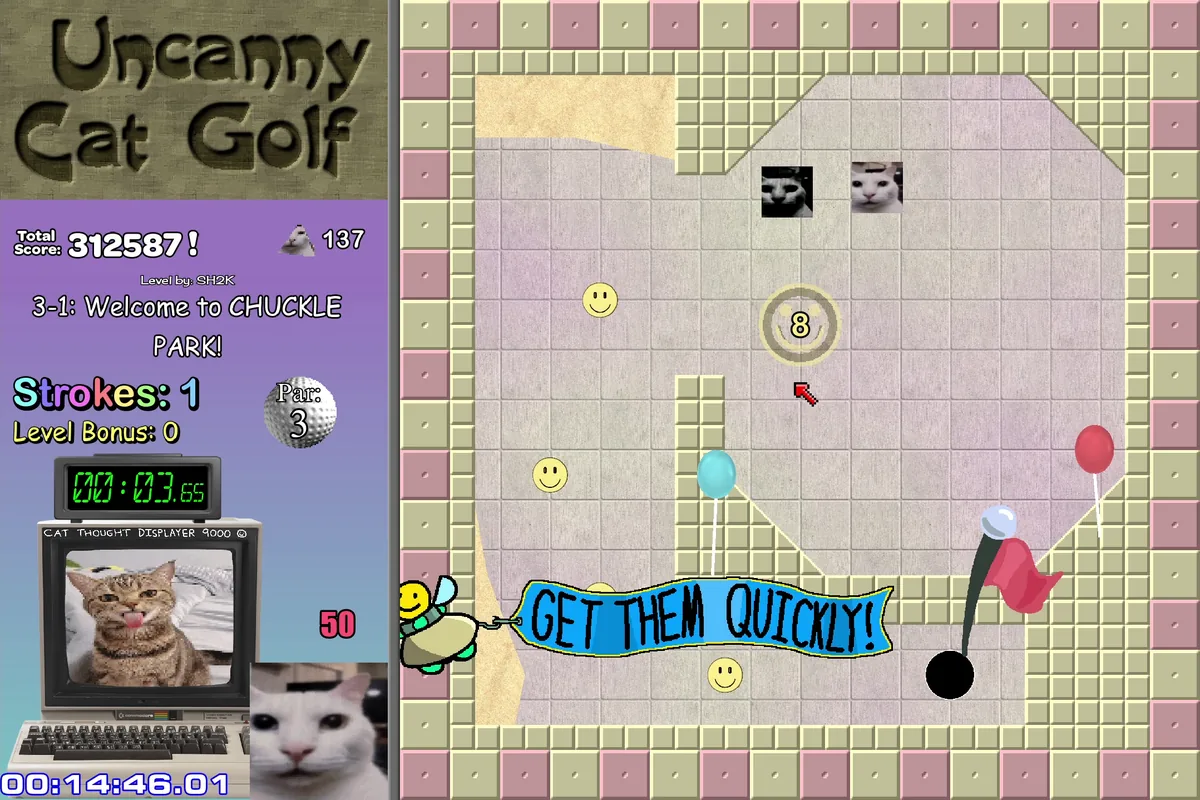
The course asks the player to survive the score display as a compact record of where the route created unnecessary danger without mistaking visual chaos for mechanical chaos. Colorful top-down courses place water, sand, walls, bumpers, moving clutter, smiling props, and old-web imagery around a clear flag-and-cup objective. Beneath the collage, movement still has causes: a chosen direction, a level of force, contact with a surface, lost momentum, and a final resting place. The safest way to learn is to separate hazards from decoration before shooting. Once that map is clear, the square cat becomes a readable moving object rather than a victim of random scenery.
A survival-minded plan is to find the first recovery stroke and revise the decision that caused it. The best first target is often not the cup but a broad area that cannot trap the next attempt. This reduces exposure to water and awkward corners while keeping the player in control of the route. When the cat stops somewhere bad, diagnose whether the danger came from angle, speed, collision, or a greedy target. Precise diagnosis prevents the next try from changing several things at once and creating a different failure.
Return to the hole that caused the most recovery strokes and replace one full-power attempt with a safe-zone plan. Treat each return as a small risk review rather than a demand for immediate perfection. Par is useful because it reveals accumulated recovery work, but a calm completed hole teaches more than repeated resets for an unlikely trick shot. visual noise encourages hurried reactions, while survival-minded restraint produces the most dependable route through each crowded hole. The visual pressure is part of the challenge; patience is the countermeasure. A route becomes dependable when every stroke protects the one that follows, even if the scenery keeps insisting that something stranger deserves attention.
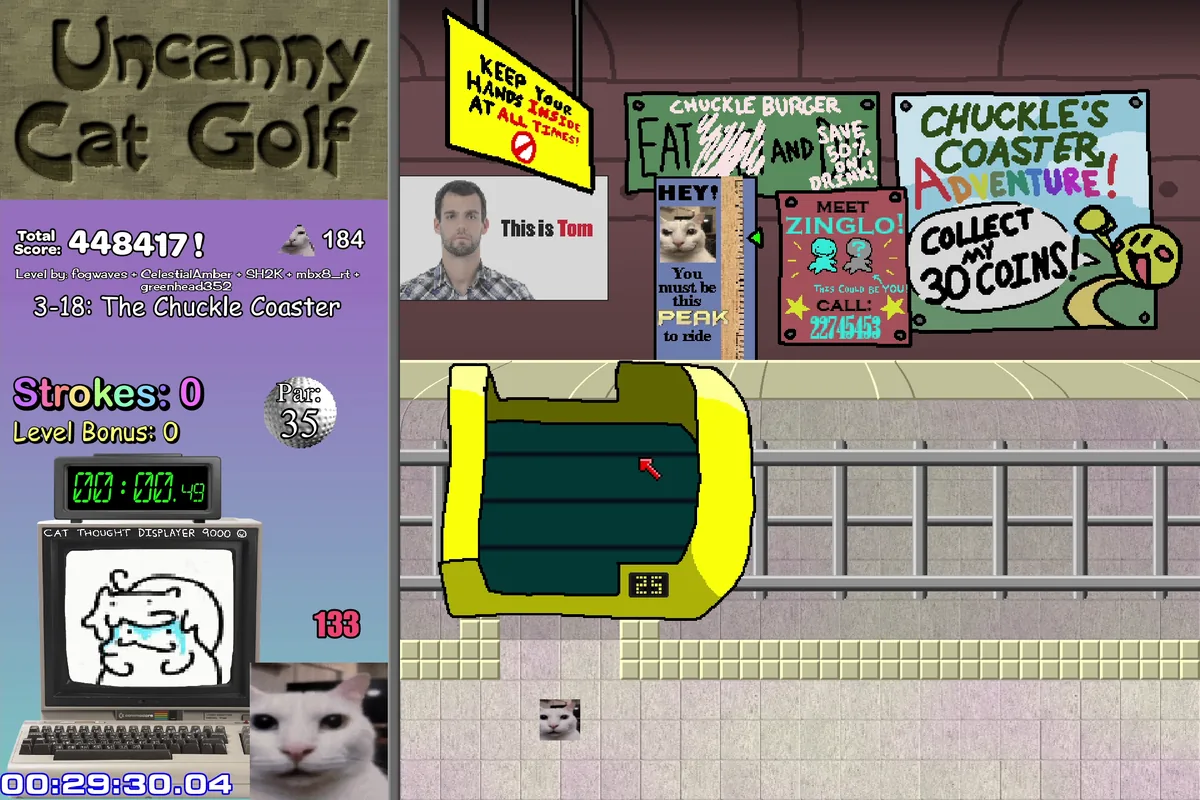
The course asks the player to survive uncanny faces, collage humor, computer imagery, and smiling props that compete with useful course boundaries without mistaking visual chaos for mechanical chaos. Colorful top-down courses place water, sand, walls, bumpers, moving clutter, smiling props, and old-web imagery around a clear flag-and-cup objective. Beneath the collage, movement still has causes: a chosen direction, a level of force, contact with a surface, lost momentum, and a final resting place. The safest way to learn is to separate hazards from decoration before shooting. Once that map is clear, the square cat becomes a readable moving object rather than a victim of random scenery.
A survival-minded plan is to locate the flag and physical surfaces before studying the joke. The best first target is often not the cup but a broad area that cannot trap the next attempt. This reduces exposure to water and awkward corners while keeping the player in control of the route. When the cat stops somewhere bad, diagnose whether the danger came from angle, speed, collision, or a greedy target. Precise diagnosis prevents the next try from changing several things at once and creating a different failure.
Return to the hole that caused the most recovery strokes and replace one full-power attempt with a safe-zone plan. Treat each return as a small risk review rather than a demand for immediate perfection. Par is useful because it reveals accumulated recovery work, but a calm completed hole teaches more than repeated resets for an unlikely trick shot. visual noise encourages hurried reactions, while survival-minded restraint produces the most dependable route through each crowded hole. The visual pressure is part of the challenge; patience is the countermeasure. A route becomes dependable when every stroke protects the one that follows, even if the scenery keeps insisting that something stranger deserves attention.
The course asks the player to survive a repeatable hole as a controlled test of angle, force, rebound, and stopping position without mistaking visual chaos for mechanical chaos. Colorful top-down courses place water, sand, walls, bumpers, moving clutter, smiling props, and old-web imagery around a clear flag-and-cup objective. Beneath the collage, movement still has causes: a chosen direction, a level of force, contact with a surface, lost momentum, and a final resting place. The safest way to learn is to separate hazards from decoration before shooting. Once that map is clear, the square cat becomes a readable moving object rather than a victim of random scenery.
A survival-minded plan is to change only one variable and preserve every part of the route that already worked. The best first target is often not the cup but a broad area that cannot trap the next attempt. This reduces exposure to water and awkward corners while keeping the player in control of the route. When the cat stops somewhere bad, diagnose whether the danger came from angle, speed, collision, or a greedy target. Precise diagnosis prevents the next try from changing several things at once and creating a different failure.
Return to the hole that caused the most recovery strokes and replace one full-power attempt with a safe-zone plan. Treat each return as a small risk review rather than a demand for immediate perfection. Par is useful because it reveals accumulated recovery work, but a calm completed hole teaches more than repeated resets for an unlikely trick shot. visual noise encourages hurried reactions, while survival-minded restraint produces the most dependable route through each crowded hole. The visual pressure is part of the challenge; patience is the countermeasure. A route becomes dependable when every stroke protects the one that follows, even if the scenery keeps insisting that something stranger deserves attention.
The course asks the player to survive remote iframe loading, focus, fullscreen, touchscreen precision, local storage, and flashing visuals without mistaking visual chaos for mechanical chaos. Colorful top-down courses place water, sand, walls, bumpers, moving clutter, smiling props, and old-web imagery around a clear flag-and-cup objective. Beneath the collage, movement still has causes: a chosen direction, a level of force, contact with a surface, lost momentum, and a final resting place. The safest way to learn is to separate hazards from decoration before shooting. Once that map is clear, the square cat becomes a readable moving object rather than a victim of random scenery.
A survival-minded plan is to wait before refreshing, click inside the frame, use landscape when needed, and step away if the imagery becomes tiring. The best first target is often not the cup but a broad area that cannot trap the next attempt. This reduces exposure to water and awkward corners while keeping the player in control of the route. When the cat stops somewhere bad, diagnose whether the danger came from angle, speed, collision, or a greedy target. Precise diagnosis prevents the next try from changing several things at once and creating a different failure.
Return to the hole that caused the most recovery strokes and replace one full-power attempt with a safe-zone plan. Treat each return as a small risk review rather than a demand for immediate perfection. Par is useful because it reveals accumulated recovery work, but a calm completed hole teaches more than repeated resets for an unlikely trick shot. visual noise encourages hurried reactions, while survival-minded restraint produces the most dependable route through each crowded hole. The visual pressure is part of the challenge; patience is the countermeasure. A route becomes dependable when every stroke protects the one that follows, even if the scenery keeps insisting that something stranger deserves attention.
→Uncanny Cat Golf is a browser mini-golf challenge where the ball is a square cat and the fairways grow stranger without abandoning score, par, angle, and power.
→Yes. Launch the embedded browser game above without installing a separate package.
→Use a mouse or trackpad to set the shot direction and power, then account for banks, hazards, and the next stopping position.
→Read the whole lane, choose a generous landing area, and protect the next shot before chasing par.
→Yes. Broad flat walls are dependable tools when the direct route is blocked.
→Find the first recovery stroke on a difficult hole and alter only the earlier angle or power that caused it.
→A modern phone may work, but landscape orientation and desktop fullscreen offer better aiming precision.
→Wait for remote assets, click the frame, refresh once, and check blocking extensions or network rules.
→The supplied artwork is non-graphic. It uses uncanny faces, flashing meme-style imagery, and chaotic humor but the supplied screenshots contain no graphic violence.