Jackpot Crash Course Gameplay
A gameplay look at the casino stage, visual novel presentation, and high-pressure choices in Jackpot Crash Course.
Casino Death-Game Visual Novel






Video
A gameplay look at the casino stage, visual novel presentation, and high-pressure choices in Jackpot Crash Course.
More footage for players who want to preview the cast, atmosphere, and route-driven drama before starting the browser game.
Home
Jump to the play area, read the introduction, and open the FAQ for this horror visual novel page.
Jackpot Crash Course invites you to a casino where the lights are bright, the audience is hungry, and a winning spin may still leave somebody ruined. The browser game follows Eddie, a convicted contestant offered the possibility of a pardon through a televised competition. That promise gives every round a tempting surface: endure the show, play by its rules, and perhaps walk away with a future. Yet the stage is built to make private guilt public, turning survival into entertainment and every participant into both player and prize.
You can play Jackpot Crash Course online in the frame above without installing a separate desktop package. Press Play, allow the visual novel assets to load, and click inside the frame if the first input does not register. The game is story-led rather than reflex-led, so its most important controls are patience and attention. Dialogue, expressions, alliances, and carefully worded options reveal far more than the glittering machinery around the contestants.
This guide approaches Jackpot Crash Course as a story about performance under judgment. Instead of repeating a scene-by-scene summary, it examines how the casino aesthetic changes the meaning of guilt, why rival contestants matter, how to read choices without spoiling a first run, and what makes the available routes worth revisiting. New players can begin with the spoiler-light sections, while returning players can use the route and character notes to plan a more deliberate replay.
The casino in Jackpot Crash Course is more than a colorful location. Casinos sell the belief that risk can be measured, luck can be purchased, and one dramatic result can erase everything that came before. The show applies that fantasy to people with criminal histories. A pardon begins to resemble a jackpot, while punishment becomes the price of a losing hand. By packaging judgment as a game, the setting makes cruelty look orderly and consequence look entertaining.
Eddie enters this system carrying more than a desire to win. He must decide how much of himself to reveal while cameras and rivals turn every reaction into useful information. Looking remorseful may earn sympathy but expose weakness. Acting confident may protect him but make him appear dangerous. Even silence becomes a performance when an unseen audience expects a story. The central pressure is therefore not simply whether Eddie survives; it is whether he can control the version of Eddie that the show creates.
That tension gives Jackpot Crash Course a distinct identity among horror visual novels. The threat does not hide in darkness. It arrives under spotlights, accompanied by rules, applause, and the language of opportunity. The brighter the presentation becomes, the more clearly the player can see how the institution manipulates everyone inside it. Visual excitement and moral discomfort are not opposing tones here. They are the two halves of the same machine.
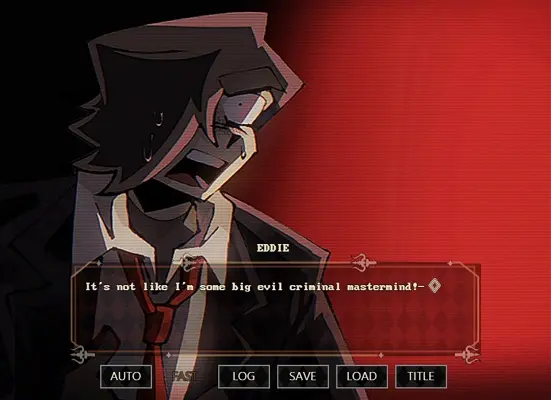
Jackpot Crash Course uses a visual novel structure built around reading, decisions, and character observation. Advance dialogue with a mouse, keyboard, or touchscreen, then select responses when the story opens a choice. There is no advantage to rushing. A line that seems like harmless banter may define a relationship, and a contestant's reaction can expose a motive that the spoken words conceal. The best first-run skill is learning to notice the difference between what the show says is happening and what the people on stage actually feel.
Treat early conversations as reconnaissance rather than a search for obviously correct answers. Ask what Eddie gains by being agreeable, confrontational, suspicious, or vulnerable. A warm response may create access to another character, but it can also establish an obligation. A challenge may reveal useful information, yet it may mark Eddie as a threat. Choices become interesting because they express a strategy and a personality at the same time.
On desktop, fullscreen offers the most comfortable way to read text and study character art. Mobile players may prefer landscape orientation so menus and dialogue boxes have more space. If sound is blocked, interact with the frame once and check browser autoplay permissions. If the player remains blank, refresh after a short wait and verify that privacy extensions are not blocking the embedded game host. Avoid clearing site storage if you want to preserve browser-based saves.
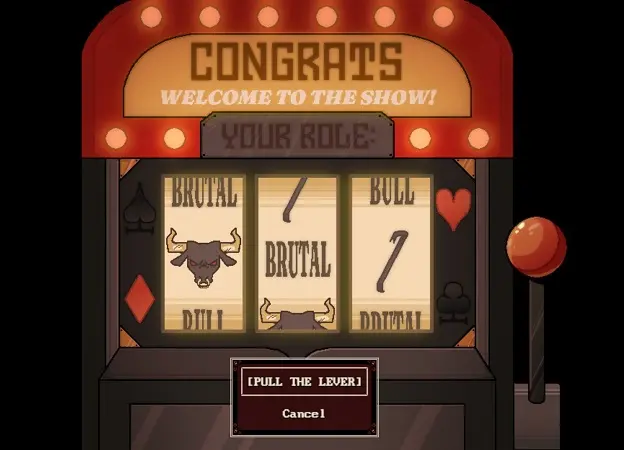
A death-game story can easily reduce its cast to a list of future eliminations. Jackpot Crash Course is more compelling when its rivals are read as competing interpretations of the show. Each person arrives with a history, a reason to distrust the offer, and a preferred way of surviving public scrutiny. Some turn charm into armor. Others use aggression, humor, apparent honesty, or strategic distance. Their methods reveal what they believe the cameras reward.
For Eddie, learning a rival's strategy is never purely social. An alliance can provide information and emotional shelter, but closeness also gives the other person leverage. Hostility may keep intentions visible while making cooperation impossible. The game asks players to judge not only whether someone is truthful, but whether truth is even the most useful currency in a contest designed around spectacle. A lie that keeps two people alive can feel more ethical than an honest confession used to destroy somebody.
Route variation deepens this cast because context changes interpretation. A contestant who appears selfish in one path may reveal fear or loyalty in another. A joke can read as comic relief until later knowledge makes it sound defensive. Replaying Jackpot Crash Course is therefore less about collecting isolated scenes and more about rebuilding a social map. Every route can move a person from background color to central concern.
The most useful Jackpot Crash Course walkthrough is a method, not a list of answers. Begin with one consistent Eddie. Decide whether your first version values caution, connection, defiance, or opportunism, and let that principle guide uncertain choices. Consistency makes the ending easier to interpret because you can trace the outcome back to an understandable pattern rather than a random collection of responses.
For a second run, change one relationship or attitude at a time. If you trusted a particular contestant, keep your other decisions similar but withhold that trust. If Eddie performed confidence, allow him to show uncertainty and compare what information becomes available. Controlled experiments help identify real turning points. Changing every answer at once may produce a new route, but it teaches very little about why the route changed.
Pay special attention when the show explains a rule, offers a reward, or frames a decision as fair. Those moments establish what the institution wants contestants to believe. Then compare the official language with the practical result. Jackpot Crash Course frequently draws tension from the gap between procedure and justice. Understanding that gap will often help more than trying to guess which button has been labeled as the good choice.
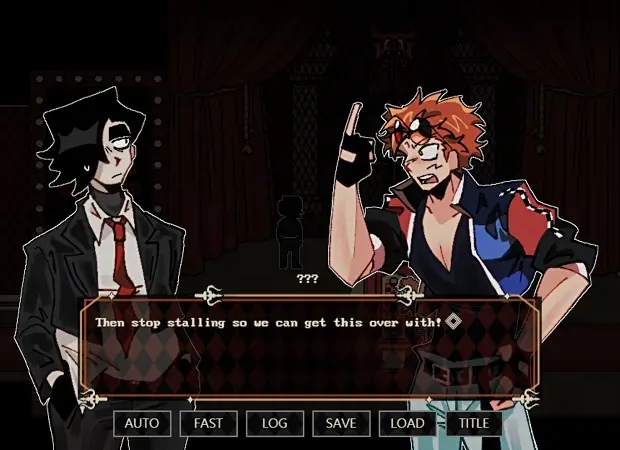
Luck is powerful in Jackpot Crash Course because it appears neutral. A wheel does not seem to care about a contestant's past, and a shuffled deck cannot deliver a speech about morality. Yet somebody chooses the rules, the possible outcomes, and the moment when chance is allowed to intervene. The game encourages players to question whether random punishment is less cruel than deliberate judgment or merely easier for the people running the show to defend.
The pardon also behaves like a form of debt. Hope keeps contestants participating even when the structure is hostile, because leaving the game may mean surrendering the only visible route to freedom. This transforms mercy into leverage. The institution can present itself as generous while demanding increasingly painful proof that a person deserves what should perhaps never have been turned into a prize.
These ideas keep the story from becoming empty casino decoration. Chips, cards, odds, prizes, and showmanship all reinforce the same question: who is permitted to calculate the value of another life? Eddie can try to beat the odds, but he also has to confront the possibility that the house defines winning in a way that protects the house. A jackpot may change his legal position without repairing what the game takes from him.
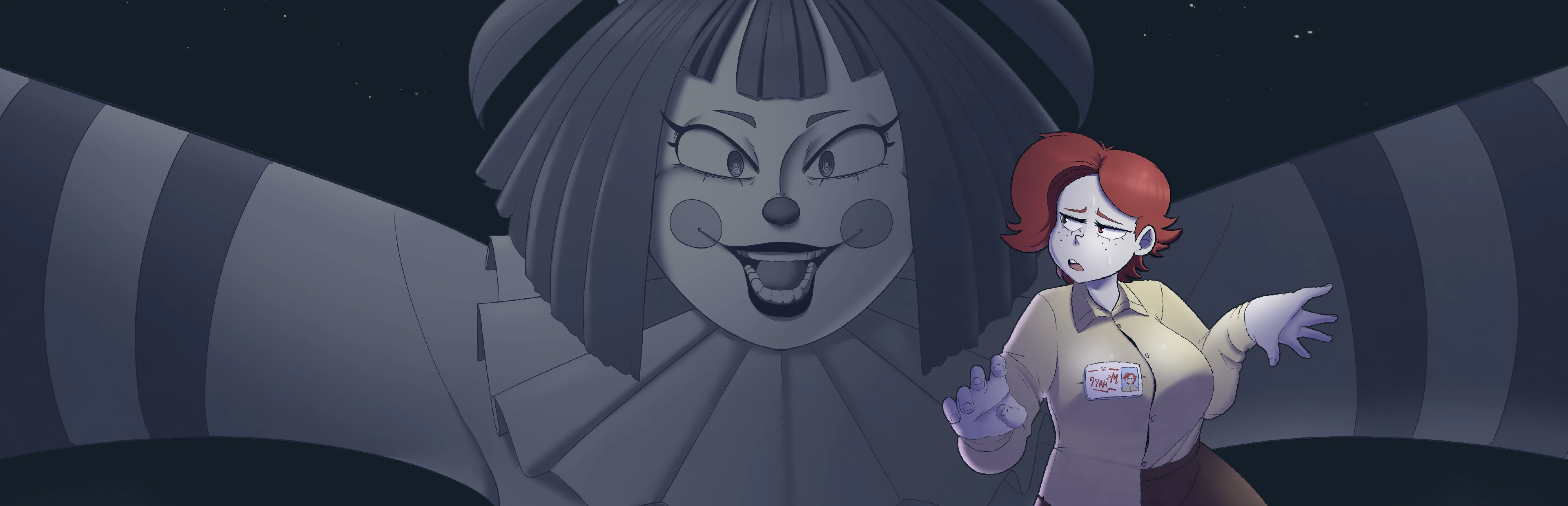
Jackpot Crash Course uses saturated casino imagery and expressive character art to create a stage that is attractive before it becomes oppressive. Bright colors encourage the eye to read each event as a performance. Characters are not merely endangered; they are displayed. That distinction matters because the awareness of an audience changes how fear is expressed. Panic can become content, grief can become a dramatic beat, and resistance can be edited into entertainment.
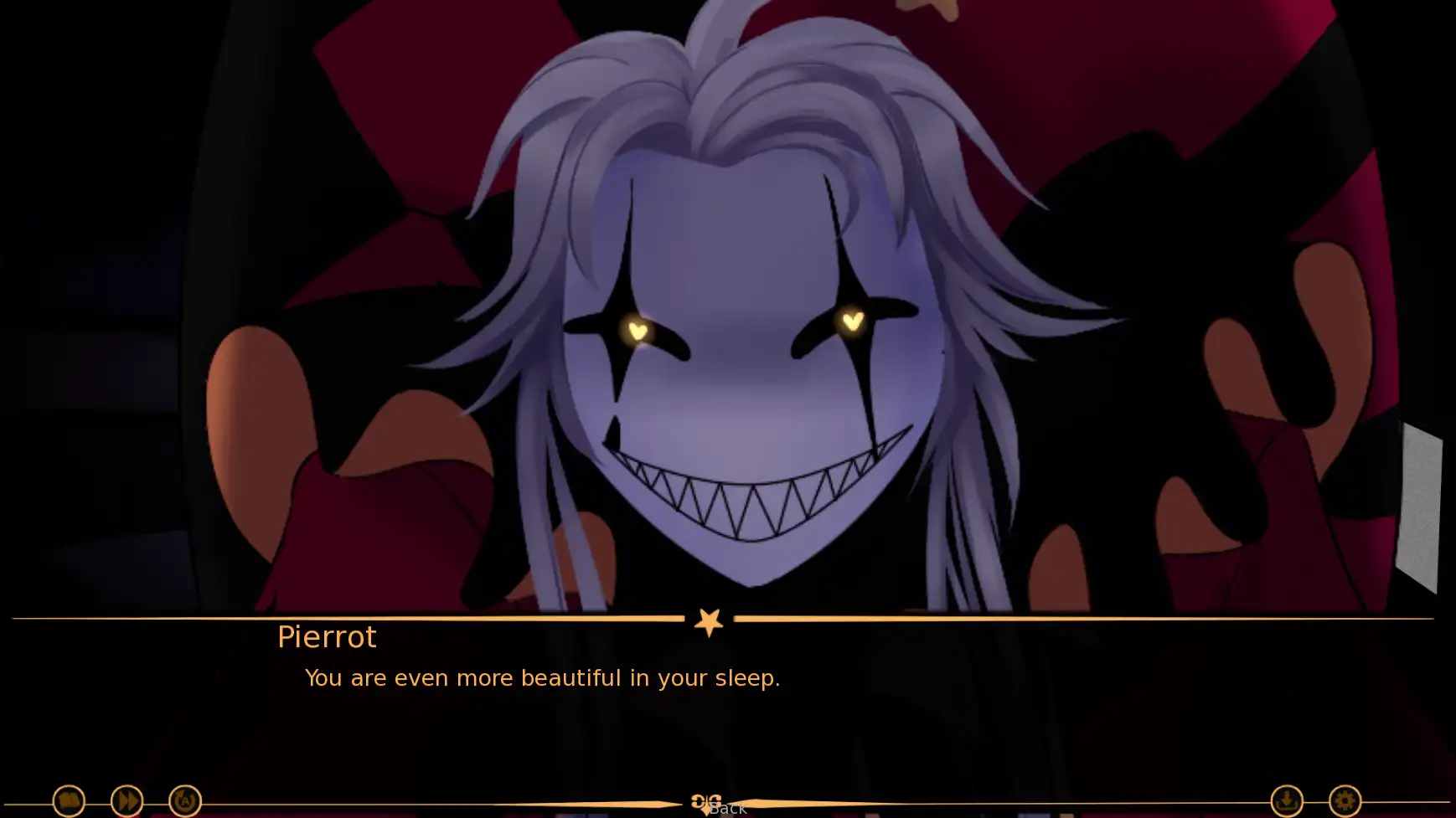
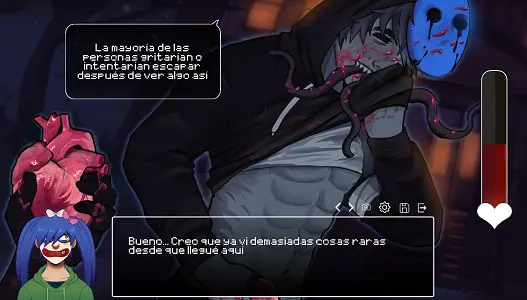
The visual novel format lets portraits and composition carry this pressure. A change in expression can reveal when a contestant's public mask slips. A crowded scene can show shifting alliances, while an isolated portrait can make the stage feel suddenly enormous. The screenshots on this page are placed beside the relevant analysis so the artwork supports the discussion rather than functioning as a disconnected gallery.
Audio and pacing complete the broadcast mood. Cheerful presentation can make a dangerous instruction more disturbing because it denies the emotional reality of the moment. Silence after a loud sequence can feel like the cameras waiting for a reaction. Players get the most from this contrast when they allow scenes to breathe instead of advancing text as quickly as possible.
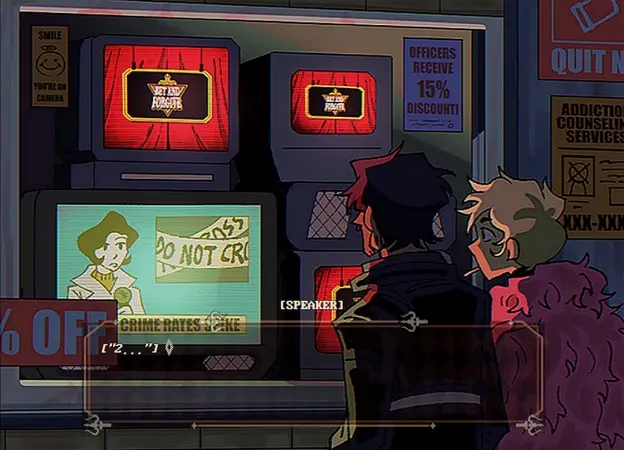
A strong ending in Jackpot Crash Course does more than announce whether Eddie won. It reveals what his chosen strategy cost, which relationships survived it, and whether the show succeeded in defining him. Two outcomes can reach a similar practical result while carrying very different emotional meanings. That is why route notes should track trust and behavior as well as visible wins and losses.
After finishing a route, write down three things: the contestant Eddie trusted most, the moment his strategy changed, and the rule that caused the greatest harm. Those notes create a useful baseline for replay without requiring a full decision spreadsheet. On the next attempt, challenge one of those three elements. The comparison will highlight new scenes and make familiar dialogue easier to read critically.
Replay also changes the player's relationship with the spectacle. During a first run, the casino can be overwhelming because every face and rule is new. Later, the player recognizes setup, foreshadowing, and manipulation. Scenes that once looked spontaneous begin to feel engineered. This added awareness is one of the main reasons the Jackpot Crash Course game remains interesting after an initial ending.
Jackpot Crash Course is intended for mature audiences. Its story includes criminal histories, coercion, blood, violence, gore, death-game danger, disturbing imagery, and unsettling sound. The colorful show presentation does not make those subjects lighthearted. Players who are uncomfortable with public humiliation, bodily harm, or stories that turn punishment into entertainment should consider whether this is the right game for their current mood.
This is an independent browser-play and information page, not the official developer website. The original game, characters, artwork, writing, music, and related materials belong to their respective creators and rights holders. The purpose of this page is to provide convenient access to the supplied browser build and an original, useful guide for players searching for Jackpot Crash Course online.
The writing here uses the game's broad premise as a starting point but develops a separate editorial approach focused on institutions, performance, social strategy, and the ethics of chance. It avoids reproducing the reference page's wording or presenting speculation as official lore. For exact release information and creator announcements, players should rely on official channels when available.
→Jackpot Crash Course is a casino-themed death-game visual novel following Eddie, a criminal contestant placed in a televised competition where survival, reputation, and the possibility of a pardon collide.
→Yes. Use the Play button above to launch the embedded Jackpot Crash Course browser game without installing a separate desktop file.
→Yes. It combines visual novel storytelling with death-game horror, violence, disturbing themes, social pressure, and a bright casino spectacle that makes the danger feel deliberately public.
→Choices shape Eddie's attitude and relationships with rival contestants. Read each response in context and watch how trust, confrontation, caution, and vulnerability affect later interactions.
→The available experience supports route-based replay. Different social priorities and responses can change which contestant interactions stand out and how the story's pressure is interpreted.
→The browser build may run on mobile, although performance and save behavior vary. Landscape orientation and fullscreen generally provide more room for dialogue and menus.
→Wait for assets to load, click inside the frame, and refresh once. If it remains blank, check whether script blockers, iframe restrictions, privacy extensions, or network filters are blocking the game host.
→No. The game contains mature criminal themes, blood, violence, gore, disturbing imagery, death-game pressure, and unsettling audio, so it is intended for mature players.
→Avoid optimizing every choice on the first run. Choose a consistent attitude for Eddie, observe the contestants, and let the ending show which relationships or rules deserve closer attention on replay.
→Replay changes how rival contestants and show rules are understood. A later route can reveal motives, foreshadowing, and manipulation that were easy to miss during the first encounter with the casino spectacle.